
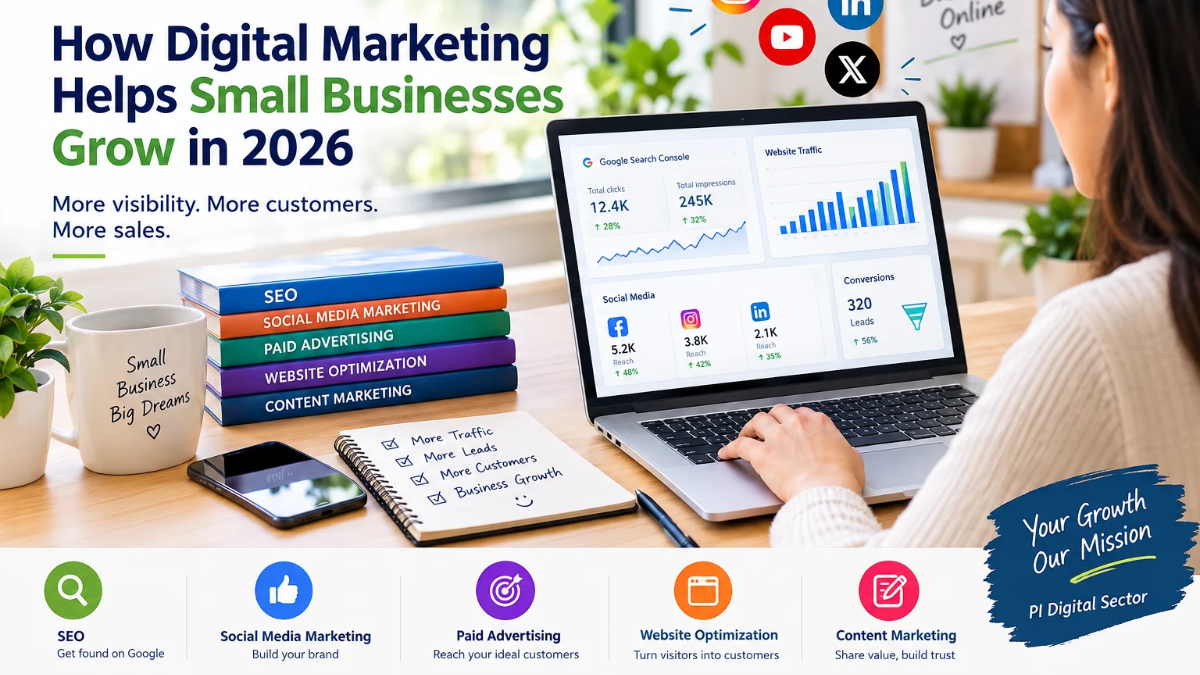
How Digital Marketing Helps Small Businesses Grow in 2026
How Digital Marketing Helps Small Businesses Grow in 2026
Introduction
In today’s competitive online world, having a website is not enough to grow a business. Customers search on Google, explore social media platforms, read online reviews, and compare different businesses before making a purchasing decision. This is why digital marketing has become essential for small businesses that want to increase brand awareness, attract potential customers, and generate more sales.
Digital marketing allows businesses to connect with their target audience through search engine optimization (SEO), social media marketing, paid advertising, email marketing, and website optimization. With the right strategy, even a small business can compete effectively in its industry.
At PI Digital Sector, we help businesses build a stronger online presence through customized digital marketing strategies designed to improve visibility, attract leads, and support long-term growth.
1. Improve Your Website’s Visibility with SEO
Search engine optimization (SEO) helps your website appear in relevant search results when potential customers look for products or services related to your business.
For example, a local moving company may want to appear when people search for “moving company near me” or “affordable movers in Surrey.” By targeting relevant keywords and creating helpful website content, businesses can improve their chances of reaching customers who are already interested in their services.
Effective SEO strategies include:
- Researching relevant keywords for your industry.
- Optimizing page titles, meta descriptions, and headings.
- Publishing useful, original blog content.
- Improving website speed and mobile usability.
- Adding relevant internal links between website pages.
- Building a strong Google Business Profile for local visibility.
SEO takes time, but consistent optimization can help businesses attract organic traffic without paying for every website visit.
2. Build Brand Awareness Through Social Media Marketing
Social media platforms such as Facebook, Instagram, LinkedIn, and Pinterest allow businesses to connect with customers and showcase their products or services.
Regular posting helps your brand remain visible and gives potential customers opportunities to learn about your business. Educational posts, customer testimonials, short videos, behind-the-scenes content, and industry tips can all help build trust.
However, success on social media is not just about posting frequently. Your content should be relevant to your audience and support a clear business objective.
A practical social media strategy includes:
- Creating a monthly content calendar.
- Publishing engaging graphics and short-form videos.
- Maintaining consistent branding across platforms.
- Responding to comments and messages.
- Reviewing engagement, reach, clicks, and leads.
Professional social media management can help business owners maintain consistency while focusing on their daily operations.
3. Generate Leads with Paid Advertising
Paid advertising is another effective way to reach potential customers. Platforms such as Google Ads and Meta Ads allow businesses to target audiences based on factors such as search intent, interests, location, and other available targeting options.
For example, a service-based business can use Meta lead-generation campaigns to encourage interested customers to submit an inquiry form. A business offering urgent services may also benefit from Google Search Ads that reach people actively looking for a solution.
To improve advertising performance, businesses should:
- Define a clear campaign objective.
- Identify their ideal customers.
- Create compelling ad copy and visuals.
- Use a relevant landing page or lead form.
- Track cost per lead and conversion rates.
- Test different advertisements and optimize campaigns.
Paid advertising requires careful budget management. Businesses should evaluate lead quality and actual sales rather than measuring success by clicks alone.
4. Optimize Your Website to Convert Visitors into Customers
Getting visitors to your website is only one part of digital marketing. Your website should also make it easy for visitors to understand your services and take the next step.
A poorly designed or confusing website may cause potential customers to leave without contacting you.
To improve website conversions, make sure your website has:
- A clear headline explaining what your business offers.
- Simple navigation and a mobile-friendly layout.
- Fast-loading pages.
- Visible contact information.
- Clear calls to action, such as “Get a Free Quote” or “Contact Us.”
- Trust-building elements, including genuine testimonials and relevant case studies.
Regularly reviewing website analytics can help you identify which pages attract visitors and where potential customers may be leaving.
5. Use Content Marketing to Build Trust
Content marketing involves creating useful information that answers your audience’s questions and helps them make informed decisions.
Blog posts, guides, videos, infographics, and frequently asked questions can demonstrate your expertise while supporting your SEO strategy.
For example, a digital marketing agency could publish articles about local SEO, social media content planning, Google Business Profile optimization, and lead-generation strategies.
When creating blog content, focus on solving real customer problems instead of repeating keywords unnecessarily. Use descriptive headings, relevant internal links, and helpful examples to make your content easier to read.
Consistent, high-quality content can support your brand’s credibility and create additional opportunities for potential customers to discover your business online.
6. Measure Results and Improve Your Strategy
Digital marketing works best when decisions are based on measurable results. Businesses should regularly evaluate their performance and adjust their strategies according to their goals.
Important metrics include:
- Website traffic and organic search clicks.
- Keyword visibility and search impressions.
- Social media engagement and website visits.
- Advertising cost per lead.
- Number of qualified inquiries.
- Conversion rate and return on advertising spend.
Tools such as Google Analytics, Google Search Console, and platform-specific advertising reports can provide useful performance insights.
Instead of focusing only on likes, followers, or website visits, prioritize the metrics that contribute to meaningful business outcomes.
Why Choose PI Digital Sector for Your Digital Marketing Needs?
Growing an online business requires a combination of strategy, creativity, and consistent optimization. PI Digital Sector helps businesses strengthen their digital presence through social media marketing, SEO, paid advertising, local SEO, and website optimization.
Our goal is to help businesses reach relevant audiences, improve online visibility, and create better opportunities for lead generation.
Whether you are launching a new business or looking to improve your existing marketing efforts, a customized digital marketing strategy can help you move toward your goals.
Conclusion
Digital marketing provides small businesses with practical ways to improve online visibility, connect with potential customers, and increase sales opportunities. By combining SEO, social media marketing, paid advertising, website optimization, and valuable content, businesses can develop a stronger and more consistent online presence.
The key is to understand your audience, set measurable goals, and improve your strategy over time.
Ready to grow your business online? Visit PI Digital Sector to explore our digital marketing services and discover how we can support your business growth.


Leave a Reply